The ability to adapt a mission at a moment’s notice is a key tenet of the Air Force drive for flexibility in air power. For warfighters in the intelligence community, the AgilePod
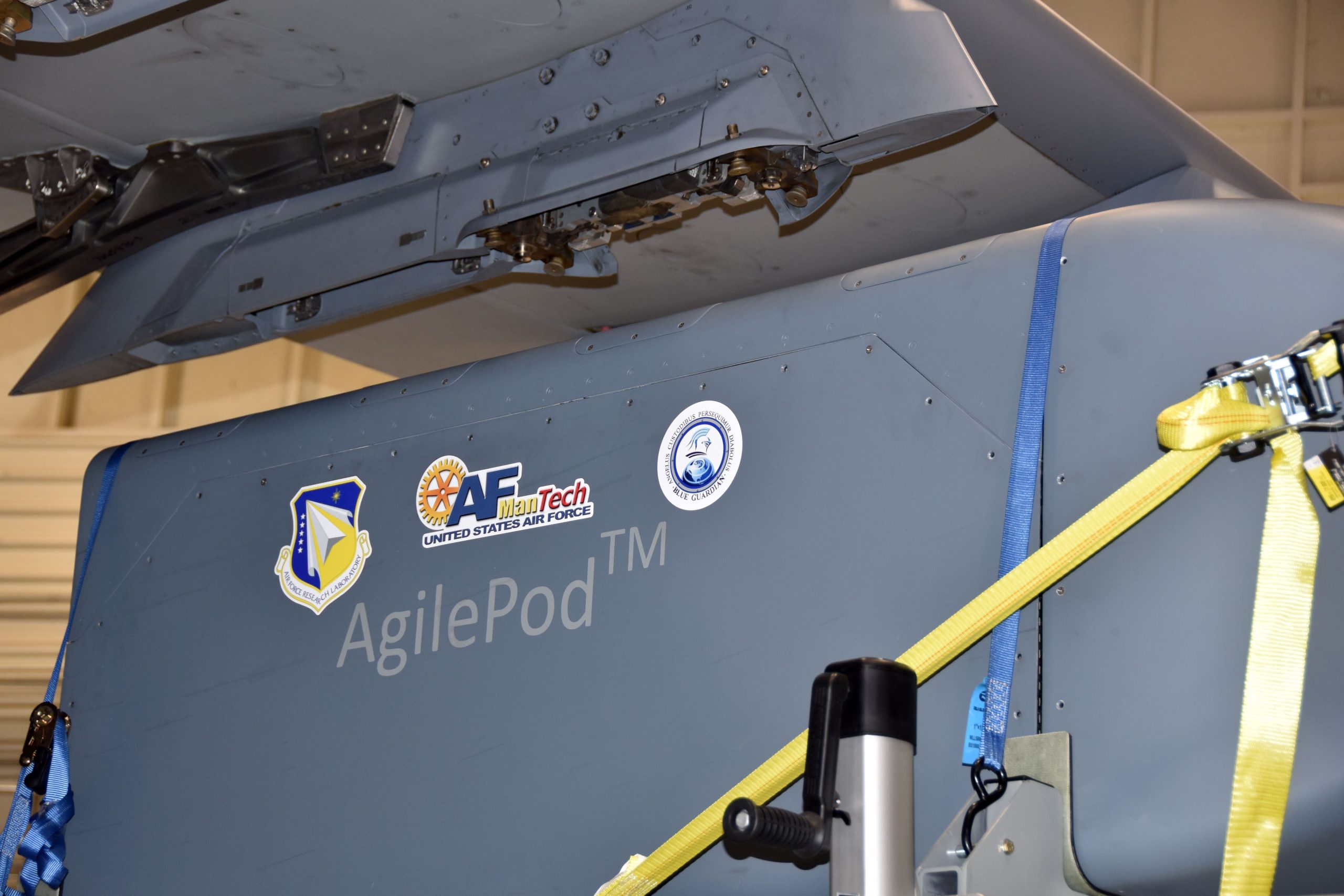
AgilePod™
read more

AFRL leads the discovery, development and delivery of warfighting technologies for our air, space and cyberspace forces. We’re pushing the boundaries and creating a new tomorrow through unparalleled research.
The ability to adapt a mission at a moment’s notice is a key tenet of the Air Force drive for flexibility in air power. For warfighters in the intelligence community, the AgilePod

The Android Team Awareness Kit, ATAK for short, is a technology developed by AFRL scientists and engineers, and over the past several years of using and refining in real-world combat zones by Special Operations forces and warfighters

AFRL is leveraging advances in synthetic biology to optimize Airmen performance and health, and to develop next-generation materials to provide an asymmetric advantage to our warfighters and weapon systems.

The Secure Live Virtual Constructive (LVC) Advanced Training Environment (SLATE) training is filling major training gaps for our pilots.

Freedom to maneuver in space is critical to meeting the United States Air Force’s mission to fly, fight, and win in air, space and cyberspace. The ability to exploit the characteristics of space gives the warfighter a competitive edge in virtually all engagements.

High Power Microwaves offer the warfighter innovative technologies that enable a variety of low collateral damage military applications that will allow the warfighter to achieve counter electronic effects, counter improvised explosive devices and counter weapons of mass destruction.
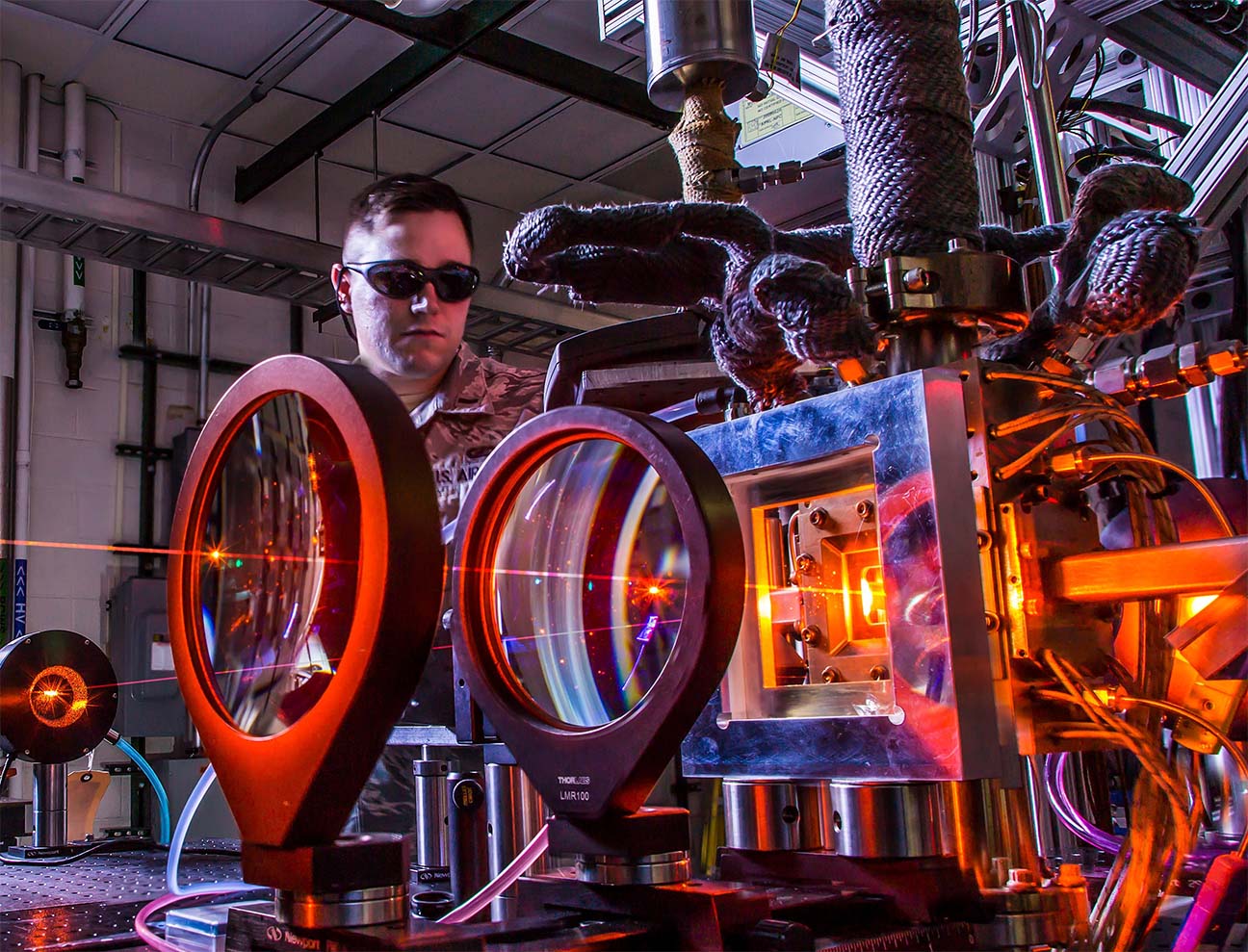
In general, laser weapons offer warfighters unique opportunities for quick and precise target engagement, flexibility and lighter and more responsive support logistics. Some of the capabilities that make lasers attractive for operational users are:

The Air Force Research Laboratory honored 21 scientists and engineers Nov. 13 for their outstanding career accomplishments during the laboratory’s 2019 Fellows and Science and Engineering Early Career Awards Banquet at the National Museum of the United States Air Force.
Science just got a little cooler in the Air Force Research Laboratory. Using a helium droplet method that chills molecular species to nearly absolute zero, researchers in the Aerospace Systems Directorate’s Turbine Engine Division are able see carbon clusters,...

The Air Force is testing materials produced through ceramic additive manufacturing to advance their potential future use in hypersonic flight vehicles. Scientists with the Air Force Research Laboratory Aerospace Systems Directorate recently entered into a Cooperative...