
WRIGHT-PATTERSON AIR FORCE BASE, Ohio — The Air Force Research Laboratory, or AFRL, contributed technological developments and unique testing facilities to support NASA’s historic Artemis II mission to return humans to the moon. From centrifuge training to advanced materials to facilitating industry partnerships, AFRL’s contributions are helping achieve the nation’s ambitious exploration goals.
“At AFRL, we discover, develop and deliver critical science and technology for our warfighters, and that mission also uniquely positions us to support the broader priorities of the nation,” said AFRL Commander and Department of the Air Force Technology Executive Officer Brig. Gen. Jason E. Bartolomei. “Aligning with partners like NASA allows us to use our capabilities to support critical national endeavors for all of our benefit.”
AFRL provided its expertise, advanced facilities and technological contributions to enhance astronaut safety and boost mission readiness for the Artemis II mission.
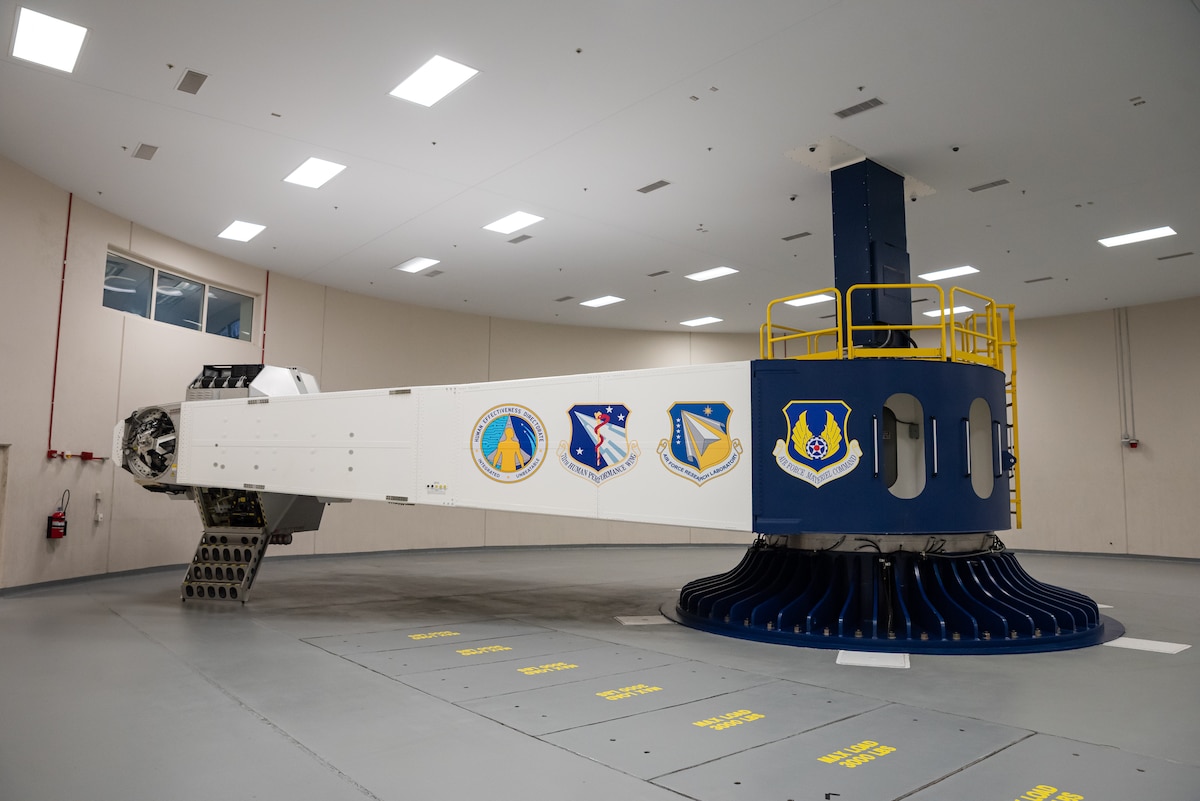
At AFRL’s 711th Human Performance Wing (711 HPW), personnel help prepare astronauts to endure the extreme physiological demands of spaceflight. Leveraging the Department of War’s only human-rated centrifuge, located at Wright-Patterson AFB, AFRL replicates the intense g-forces astronauts face during launch and re-entry. These sophisticated sessions are critical engineering evaluations to ensure that astronauts can effectively reach and operate capsule controls while under extreme physical stress. The highly realistic training conditions enable crews to rehearse vital physiological countermeasures and develop the physical resilience necessary for the rigors of space travel. Notably, NASA astronaut Victor Glover, assigned to the Artemis II mission, visited AFRL in 2018 and 2019 to undergo centrifuge training and participate in a research study at Wright-Patterson Air Force Base in Ohio.
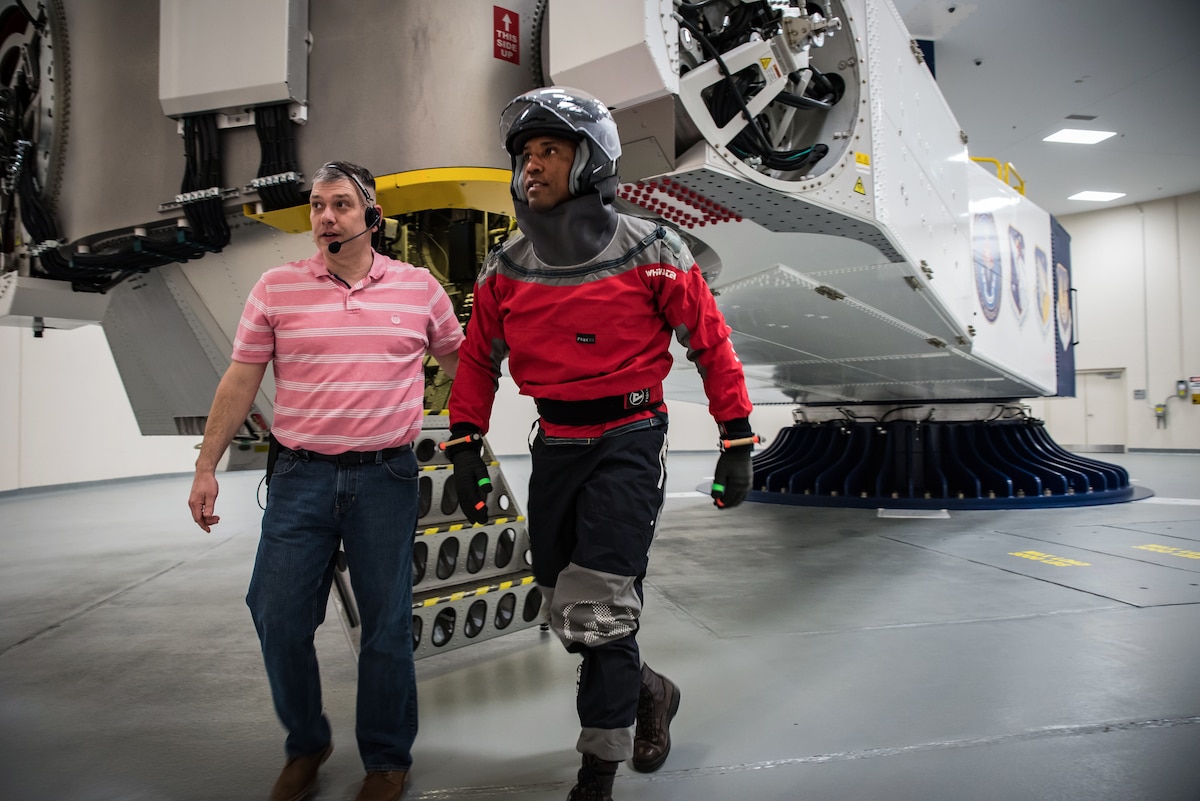
“Our mission revolves around supporting the human element, which is at the core of every operation,” said Col. Dale Harrell, commander of the 711th Human Performance Wing. “From advanced testing to groundbreaking research, our work is designed to enhance readiness, safety and well-being. Whether in the unforgiving environments of space or on challenging battlefields, this is how AFRL drives mission success.”
Beyond physical readiness, AFRL specializes in validating the safety and structural integrity of mission hardware and gear. Using the 711 HPW’s advanced Horizontal Impulse Accelerator and the Vertical Deceleration Tower, both one-of-a-kind human-rated test facilities in AFRL’s Biodynamics Lab, lab personnel simulate accelerative impact scenarios spacecraft might encounter during capsule re-entry and landing. The same facilities can evaluate the comfort of the occupants in the seat and flight suit during simulated impacts. Additionally, laboratory engineers conducted detailed analyses of the astronauts’ hearing protection to ensure it would effectively safeguard them from dangerous noise levels during reentry and splashdown.
Managing extreme heat during Earth reentry is one of the greatest technical hurdles for any spaceflight. AFRL’s expertise in high-temperature composites and thermal protection systems, developed over decades for military applications, proved helpful in addressing the unique challenges for Artemis II’s reentry. Researchers at AFRL provided facilities and expertise in refining spacecraft thermal protection systems, ensuring durability during reentry phases.
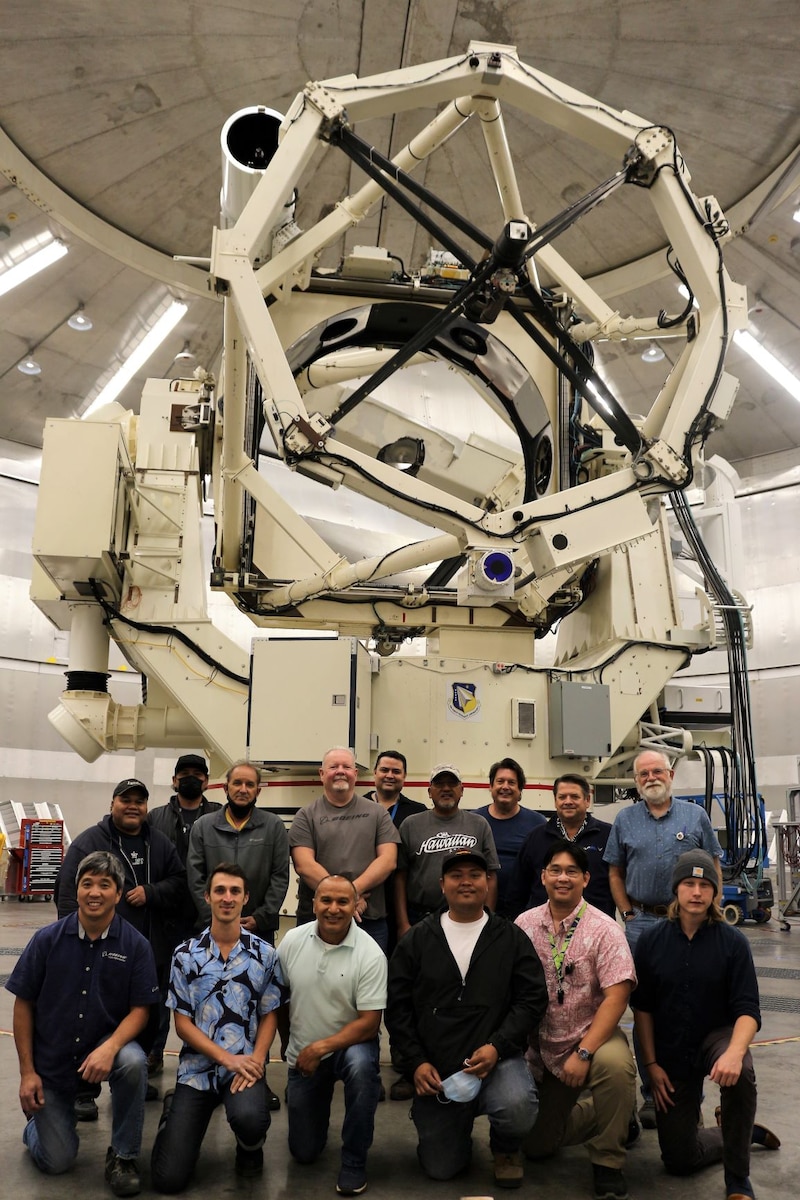
AFRL researchers provided space tracking and space situational awareness expertise to the Artemis II spacecraft’s journey. AFRL’s Maui Space Surveillance Site utilized advanced optical and tracking technologies to ensure precise monitoring in space. Working with NASA, AFRL aids in enhancing cislunar space situational awareness, a critical aspect of space traffic management for the Artemis program and future exploratory missions.
AFRL also partners with commercial space entities to accelerate the development of space technologies. At AFRL’s rocket facility in California, AFRL and partners work together to refine and test propulsion systems, a key component in lunar lander technologies. The lab is also collaborating with industry to advance guidance, navigation and control technologies on small satellite systems.
“This mission to the moon is a powerful example of what’s possible when we work with our partners to accelerate technology development,” said Bartolomei. “When we work together sharing expertise, facilities and scientific advancements, we generate amazing technological capabilities at speed, bringing the future faster.”
Through ongoing investments in advanced technologies, AFRL continues to demonstrate its potential to significantly enhance both warfighter readiness and the nation’s technological edge.
About AFRL
The Air Force Research Laboratory is the Department of the Air Force’s primary scientific research and development center and one of six centers within Air Force Materiel Command. AFRL leads the discovery, development and delivery of technologies for air, space and the multidomain. With a workforce spanning seven mission areas at more than 40 locations worldwide, AFRL conducts research ranging from basic science to advanced technology development. For more information, visit afresearchlab.com.